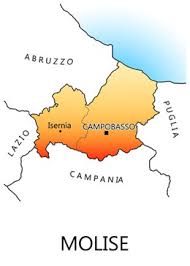
Molise is a small region its countryside richly diverse from the coastal region, where sand dunes run gently along the Adriatic coast 
then sweep inland to where is brushes up against the borders plains of Puglia, mountains of Abruzzo, hills of Lazio and rolling hills of Campania.


 Of course, bears like honey, and they will break open trees to find it if they come across a wild bee colony, but their diet mostly consists of vegetation. They are particularly fond of berries and a small plant called Plantain.
  Their diet does vary, and they will eat meat too but they will not kill to eat, only choosing to devour carcases of animals killed by wolves.
They are not of course small cuddly creatures, the male bear often well in excess of 150 kilos, or 20 stone, standing almost six feet high.
Bears live a reasonably long life if they survive to adulthood surviving to around 40 years old.
The females are smaller, and their babies when born weigh less than 500 grammes, about a pound ! Poor Mum often has three cubs, all of which she feeds herself. The cubs may often be from more than one Father, although as the mating season is fairly short they are all born at the same time. This usually born in February when there is often still snow on the ground. They will then stay hidden away deep in caves or rocks until the weather is warmer and food more easily accessible.
Cubs do grow quickly but remain with their Mothers until they are two years old. They are extremely vulnerable to attack even from male bears and wolves.
 Bears do not see very well, although they have a very keen sense of smell and excellent hearing.
 These are both senses which are essential for their survival.
If you do go down to the woods today, in Molise anyway keep your eyes open as they do like to come out early in the morning or the late afternoon.
I was recently lucky enough to have the opportunity to walk in the park with Paola Grassi from the Escursioni in Montagna group in Pescasseroli... A delightful village on the Abruzzo and Molise borders in the National park.
Paola was freindly, well informed and pleasant. She took a keen interest in the whole group and was a fascinating source of information on the wildlife and countryside around us.
The walk was easy going and would be suitable for anyone able to walk at a reasonable pace, although the terrain at times was not easy for an inexperienced hiker.
We were not fortunate enough to see any bears, but I can't wait to go back again, and certainly hope to have better luck next time.
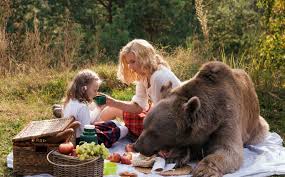
Why don't you come and join me for a picnic this summer.. you will need your picnic, a pair of good binoculars and a lot of patience to sit quietly watching the mountain slopes, and you just never know your luck .....
then sweep inland to where is brushes up against the borders plains of Puglia, mountains of Abruzzo, hills of Lazio and rolling hills of Campania.


Geographically it presents an opportunity to discover such a huge range of different features in a small area. At almost every turn in the road, you are met by an astounding view of mountain, valley, lake, river, meadow or rolling hill.


The animals here are a testament to the wild, sparsely populated areas of forest, field, mountain and hillside.
 Moles, hares, foxes, stoats, weasels, mice, snakes, scorpions, spiders and lizards amongst all live happily in this region, mostly undisturbed in


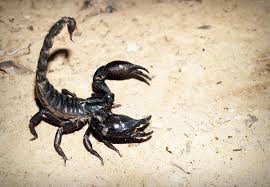

There is little that is a danger to man, and all the wild life here is happy living largely undisturbed, hence why it remains mostly in such abundance,
Wolves can be found in most areas now, even fairly near the towns. They are hunters but mostly happy to survive on the abundance of foxes, hare and other small mammals found in the forests here.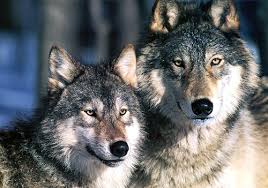
Wild boar were in decline but are now fairly numerous again. A few weeks ago I met about ten crossing the road on my way home late one evening. Thinking they had all gone I set off again only to be confronted by a very large male. He was not happy meeting me either, and did rather a lot of damage to my car.
The young ones are very cute, as all baby animals are but the males not quite so cuddly.


From Hares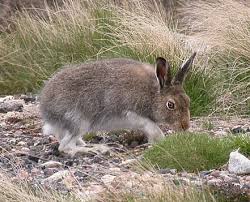
to Bears
The animals here are a testament to the wild, sparsely populated areas of forest, field, mountain and hillside.
 Moles, hares, foxes, stoats, weasels, mice, snakes, scorpions, spiders and lizards amongst all live happily in this region, mostly undisturbed in
the vast areas of countryside.
There is little that is a danger to man, and all the wild life here is happy living largely undisturbed, hence why it remains mostly in such abundance,
Wolves can be found in most areas now, even fairly near the towns. They are hunters but mostly happy to survive on the abundance of foxes, hare and other small mammals found in the forests here.
Wild boar were in decline but are now fairly numerous again. A few weeks ago I met about ten crossing the road on my way home late one evening. Thinking they had all gone I set off again only to be confronted by a very large male.
The young ones are very cute, as all baby animals are but the males not quite so cuddly.
On the border with Abruzzo there are still a number of bears, living contentedly in an area of National park. ....They are called 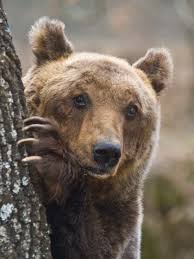 Mariscan Bears, sadly there are not many of them, but the number has remained stable for a number of years, now there around sixty.
They are shy, preferring to stay hidden in the dense forest for a large part of the time. In the spring when they awaken from their winter slumbers they set off to explore the lower pastures to look for food,  where they can often be seen early in the morning or late in the afternoon, often quite close to the road.
Of course, bears like honey, and they will break open trees to find it if they come across a wild bee colony, but their diet mostly consists of vegetation. They are particularly fond of berries and a small plant called Plantain. Their diet does vary, and they will eat meat too but they will not kill to eat, only choosing to devour carcases of animals killed by wolves.They are not of course small cuddly creatures, the male bear often well in excess of 150 kilos, or 20 stone, standing almost six feet high.
Bears live a reasonably long life if they survive to adulthood surviving to around 40 years old.
The females are smaller, and their babies when born weigh less than 500 grammes, about a pound ! Poor Mum often has three cubs, all of which she feeds herself. The cubs may often be from more than one Father, although as the mating season is fairly short they are all born at the same time. This usually born in February when there is often still snow on the ground. They will then stay hidden away deep in caves or rocks until the weather is warmer and food more easily accessible.
Cubs do grow quickly but remain with their Mothers until they are two years old. They are extremely vulnerable to attack even from male bears and wolves.
These are both senses which are essential for their survival.If you do go down to the woods today, in Molise anyway keep your eyes open as they do like to come out early in the morning or the late afternoon.
I was recently lucky enough to have the opportunity to walk in the park with Paola Grassi from the Escursioni in Montagna group in Pescasseroli... A delightful village on the Abruzzo and Molise borders in the National park.
Paola was freindly, well informed and pleasant. She took a keen interest in the whole group and was a fascinating source of information on the wildlife and countryside around us.
The walk was easy going and would be suitable for anyone able to walk at a reasonable pace, although the terrain at times was not easy for an inexperienced hiker.
We were not fortunate enough to see any bears, but I can't wait to go back again, and certainly hope to have better luck next time.
Why don't you come and join me for a picnic this summer.. you will need your picnic, a pair of good binoculars and a lot of patience to sit quietly watching the mountain slopes, and you just never know your luck .....

No comments:
Post a Comment